
As the result of the British surrender at Saratoga in October 1777, several thousand British and German troops became American captives. Known as the Convention Army, these troops spent one year in the Boston area before being marched to Virginia. While many of them remained in captivity until the end of the war, others were exchanged or released on parole before 1783.
Among the latter was the commander of the Braunschweig corps, General Friedrich Adolph Riedesel. In the fall of 1779, after two years in captivity, he was allowed to leave Virginia and go to New York on parole. After his exchange in the summer of 1781, he was finally able to return to Quebec and resume command of the German troops stationed there. After several years of inactivity, Riedesel was hopeful that he would be able to participate in another military expedition, perhaps even as its commander.
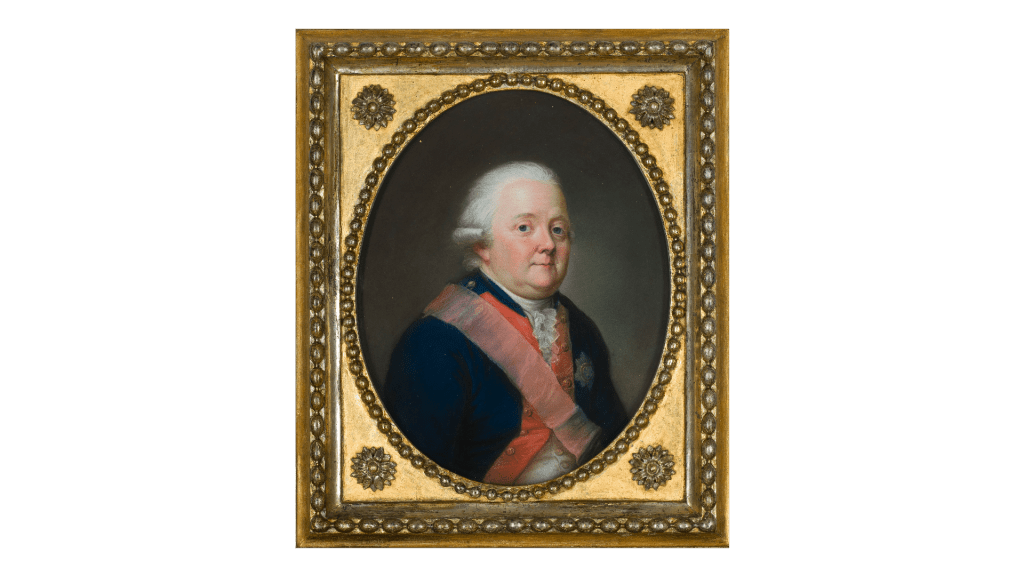
In October 1781, not long after his arrival in Quebec, Riedesel sent an update concerning the state of the war to his ruler, the Duke of Braunschweig. This report was optimistic. Riedesel acknowledged that British military activity in New York had been limited to defensive actions due to a shortage of land forces and insufficient naval power. However, there were reasons for hope. One of them was the possibility that the new state of Vermont would become a British province. Although Riedesel did not include any details about this development, Governor Haldimand was indeed in communication with representatives of Vermont to convince them to return to the Crown. Riedesel thought that this decision would have a significant, and positive, impact on the war.
At that time, Riedesel did not quite know what to make of Haldimand. When he had departed from Quebec with Burgoyne four years earlier, in the summer of 1777, the provincial governor had been Guy Carleton. Their relationship had been very good. In 1778, he was replaced by Sir Frederick Haldimand. After his return to Canada, Riedesel was unsure whether he would get along with his new commander. He was hopeful, he wrote to the duke, that glowing letters of introduction from General Clinton and Lord Germain would help establish good terms.
More important was an update that Riedesel communicated in cypher: General Clinton was planning a large-scale offensive action designed to trap the enemy between two large armies. It would go like this: General Cornwallis would launch an operation into Virginia and the Carolinas, with the goal of ruining these provinces and with it, the American economy. This would cause France and other foreign nations to stop supporting the rebels. In the meantime, Clinton and Haldimand would lead a joint expedition from Canada toward Fort Pitt and into the Ohio Valley. Riedesel was pleased to report that Clinton had recommended him as the commander of this campaign.

However, unfortunately, Haldimand did not support these plans. He declined to cooperate, presumably because he deemed the operation to be too risky. Riedesel wondered how “this refusal will be viewed in England.”
In the end, there would not be another major offensive campaign. Ironically, Riedesel composed his letter to the duke the very day after the British army under Cornwallis surrendered at Yorktown. He was completely unaware that the Southern campaign had already failed. Moreover, the American victory at Yorktown convinced Vermont to pursue admission to the United States instead of a return to British rule. To his great disappointment, Riedesel and his troops would remain in Canada, largely inactive, until the British evacuated the troops from North America in the summer of 1783.
A note about the translation: German-authored records from the time typically describe Native Americans as “Wilde,” which translates as savages. In order to remain faithful to the original text, I am using this term in the translation.
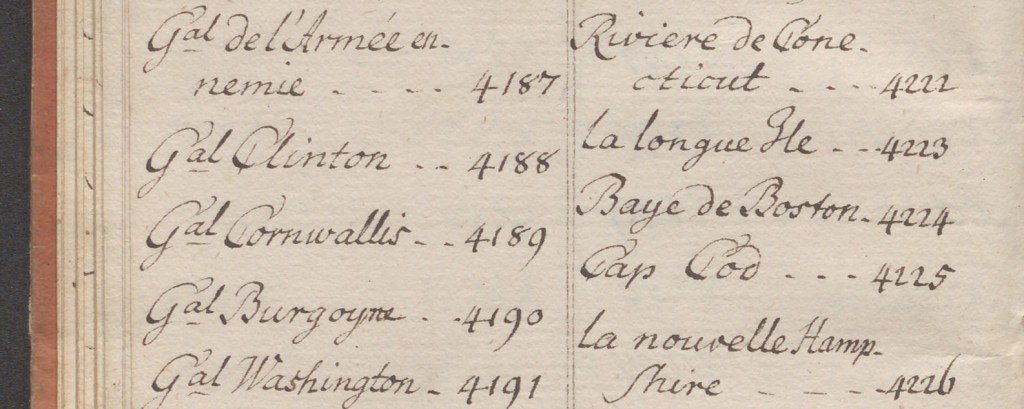
The letter featured in this post includes the solution for the encrypted text (on a separate leaf). But that is not always the case! Thankfully, Riedesel’s key to the cypher he used in the American war and during his subsequent military service in the Netherlands has been preserved.

In this cypher, numbers represent individual letters, letter pairs, or short segments of French words. These numbers are then combined to form complete words and sentences in French. The cypher also includes a collection of commonly used place names and personal names for both the American Revolutionary war and Riedesel’s service in the Netherlands. Here is an example from the former:
Finally, readers will be curious about the meaning of the post’s title! It translates as: une-vi-gou-re-U-se-ex-pe-di-tion.
ENGLISH TRANSLATION
Quebec, 20 October 1781
Before my departure from New York, I most humbly submitted to His Serene Highness a brief report, both on the separate movements of the army under General Sir Henry Clinton and Mr. Rochambeau [Rothambauld], as well as, generally, on the state and operations of the army in the various provinces of Virginia, South Carolina, and the West Indian colonies; in short, of the entire theater of war on this side of the ocean, along with speculations on what the enemy might undertake and what we would do in response. On our part, overall, everything was merely a defensive plan, due both to a lack of land forces and naval power, and it might well remain so until a final peace is achieved, although England is not able to overcome these obstacles, or unless Providence should awaken discord between the colonies and the European powers currently at war with us.
Sir Henry Clinton flatters himself that, despite all the efforts of the combined enemies, he will be able to retain and defend New York. And since, with the approaching winter, the enemy armies, due both to the season and a lack of provisions, will have to leave the areas surrounding New York to take up winter quarters, it is therefore
[Here follows a portion written in cypher. A French translation of the cypher is inserted on a separate sheet. An English translation of the text follows:] determined to undertake a vigorous winter expedition in Virginia, while at the same time allowing General Cornwallis to operate in cooperation against North Carolina. The general gives as his reason that, since Virginia and the two Carolinas are currently the only provinces which, through their natural products, can bring in specie [hard currency] from France to America, it would be of great importance to ruin them. This would prevent the Americans from being able to repay the French and other nations for the funds they have received, which would eventually cause these nations to stop sending the necessary supplies for the continuation of the war and other essential goods for the provinces, without which neither their army nor the provinces themselves can survive.
General Clinton communicated with me in general his ideas on this matter before my departure from New York, at the same time inviting General Haldimand to undertake a cooperative expedition with a part of his troops from the Niagara area toward Fort Pitt and the Ohio River, in order to operate behind the enemy and place them between two fronts. The expedition was planned with every possible precaution and without risk of exposing this corps to the same hazards and misfortunes as those experienced by General Burgoyne. General Clinton also kindly proposed that I command it, but General Haldimand does not share the same opinion; he does not like risking troops without reason and has entirely refused this cooperation with General Clinton. Time will tell how this refusal will be viewed in England. [End cypher]
In this province, everything is in a very calm state. All our small-scale operations for the moment consist merely of minor driving off [of the enemy] undertaken by savages [“Wilden”] and Rangers. The troops themselves are being used solely for fortification work, to make the city of Quebec as strong and formidable as possible. It appears that the general’s main objective is simply to hold on to the province, rather than to undertake any new conquests. This is presumably also the instruction he received from the minister.
There is a treaty in prospect with the State of Vermont, also known as the Hampshire Grants, and one flatters oneself that this province might once again be brought under the authority of the Crown of England. Should that come to pass, it could bring about a favorable shift in the conduct of the war and reawaken the army in Canada to renewed activity. The matter will not be decided before the departure of this fleet; therefore, I will not be able to report further to His Serene Highness until the coming spring.
Upon my arrival here, General Haldimand showered me with every possible courtesy, and he appears to be paying attention to the strong recommendations from Lord George Germain and Sir Henry Clinton, through whom I was introduced to him. However, he is a very mysterious [secretive] man who communicates none of his ideas, does everything himself, and, once he has made up his mind, cannot be dissuaded from it by anything. I will do everything in my power to maintain a good standing in his eyes, and as far as service in the army is concerned, that should not be difficult. I only hope that the well-being of the troops and the interests of His Serene Highness will not, in time, place me in an unpleasant conflict with him.
I hope that by next spring I may be able to fill my report with more pleasing news. But as I have nothing further at present that would be worthy of reporting to His Serene Highness, I most respectfully commend myself to Your Serene Highness’s continued gracious favor and remain, in deepest devotion, Your Serene Highness’s most humble servant, Riedesel

TRANSCRIPTION
Quebec, d. 20ten October 1781
Vor meiner Abreise von New=York, habe ich Erw: Herzogl: Durchlaucht unterthänigst ein kurtzes Detail eingesandt, sowohl von den separaten Bewegungen der Armee des General Sir Henry Clinton, und Mr. Rothambauld [Rochambeau], als auch en gros, von dem Zustande und Operationen der Armee in denen verschiedenen Provintzen von Virginien, Sud=Carolina, und denen West=Indischen Colonien, in Summa, von dem gantzen Theatre de guerre dießeits des Oceans, nebst denen Vermuthungen was der Feind vornehmen würde, und was dagegen zu thun entschloßen wären. Unserer Seits, war alles in Gantzen genommen. Nur ein Defensions=Plan, sowohl wegen Mangel an Land=Truppen, als an See=Macht, und mögte auch wohl ein solcher bleiben bis ein endlicher Frieden zu Stande kömmt, wofern mann in England nicht im Stande ist, diese Obstacula zu heben, oder, daß die Providence eine Uneinigkeit zwischen denen Colonien, und denen Europäischen, gegen uns Krieg führenden Mächten erwecket.
Sir Henry Clinton flattiert sich, alles Efforts der combinierten Feinde ohnerachtet, New=Yorck in Besitz zu behalten, und zu souteniren, und da nun bey den bald eintretenden Winter, die feindliche Armeen sowohl wegen der Saison, als auch wegen Mangel an Subsistence die Gegenden um New=York verlaßen müßen um Winter=Quartier zu nehmen, so ist es sodenn
[Hier folgt ein Abschnitt, der in Chiffre geschrieben ist. Eine französische Übersetzung ist auf einem separaten Blatt beigefügt. Dieser Text lautet:]
So ist es sodenn determiné d’entreprendre une vigoureuse Expedition d’hiver dans la Virginie, laisfant en mème tems agir, le Gal Cornwallis en cooperation contre la Nord-Carolina. Gl donne pour raison, que comme la Virginie er les deux Carolines sont à present les seules Provinces, qui par leur Produits naturels peuvent rapporter des Especes de la France en Amerique, is seroit de grande importance, à les ruiner; pour mettre les Americains hors d’Etat, de rembourser aux Francois er aux autres nations les deboursés qu’ils en ont reçous, ce qui lasferoit enfin ces Nations de plus leurs envoyer les Articles necessaires pour le maintien de la Guerre et les autres besoins particuliers pour les Provinces, Sans lesquels ni leur Armée ni les Provinces mème, peuvent subsister.
Le Gal Clinton m’a communiqué en gros ses Idées la dessus avant mon depart de la Nouvelle York invitant en même tems le Gal Haldimand à une Expedition cooperante avec une Partie de ses troupe du Cote de Niagara vers le Fort Pitt et la Riviere d’Ohio pour agir dans le dos de l’ennemi et le mettre entre deux feux; l’Expedition etoit calcoulée avec toutes les Precautions possibles et sand risque, d’exposer ce corps aux memes hazards et malheurs que celui du Gal Bourgoyne; le General Clinton avoir en même tems la bonté, de me proposer pour le commander, mais Gal Haldimand n’est pas de la meme opinion, il n’aime pas de risquer les troupes sans raison et il a refuse entierement cette cooperation au Gal Clinton. Le tems nous apprendra de qual Oeil on regardera ce refuse en Angleterre. [Ende Chiffre]
In dieser Provintz ist alles in sehr ruhiger Verfassung, alle unsere kleinen Operationen werden für jetzt nur mit kleinen Fortjagen von Wilden, und Rangers gemacht, die Truppen selbst aber, werden bloß zum Festungs=Bau gebrauchet, um die Stadt Quebec so fest und formidable wie möglich zu machen, und es scheint das Haupt=Project des Generals zu sein, nur bloß die Provintz zu erhalten, aber keine neue Eroberungen zu machen; Vermutlich ist dieses auch seine Instruction von dem Minister.
Es ist ein Traité vor, zwischen dem Staate Vermond, sonst auch Hampshire=Grants genannt, und mann f[l]attiret sich, diese Provintz der Krone England wieder unterworfen zu sehen. Sollte es dahin kommen, so könnte dieses eine glückliche Veränderung in dem Sisteme des Krieges geben, und die Armee von Canada, von neuen in Activitaet bringen. Die Sache wird nicht vor Abgang dieser Flotte decidiret sein, mithin werde ich vor dem künftigen Frühjahre nicht näher davon Erw. Herzogl: Durchlaucht berichten können.
Der General Haldimand hat mich bey meiner Ankunft hieselbst, mit aller möglichen Politesse überhäufet, und scheinet Attention zu nehmen von der großen Recommendation von Lord George Germain, und Sir Henry Clinton, mit welchen ich bey ihm introducirt worden. Er ist jedoch ein sehr misterieuser Mann, der nichts von seinen Ideen communiciret, alles selbst arbeitet, und wenn er einmahl einen Vorsatz genommen hat, durch nichts davon abzubringen ist. Ich werde alles in der Welt thun, um mich in einer guten Idée bey ihm zu conserviren, und was den Diesnt in der Armee betrifft, wird solches auch leicht sein; Nur will ich wünschen, daß das Beste der Truppen, und das Interesse Erw. Herzogl. Durchlaucht mich in der Folge nicht in eine unangenehme Collision mit ihm setzet.
Ich will wünschen, daß ich künftiges Früh=Jahr meinen Bericht mit angenemhen Nachrichten anfüllen kann, da ich aber für dieses mahl nichts mehr weiß, was würdig genug wäre an Erw. Herzogl. Dutchlaucht zu melden, so empfehle ich mich bestens dero fortdauernden höchsten Gnade, und ersterbe in tieffster Devotion, Erw. Herzogl. Durchlaucht, Unterthänigster Knecht, Riedesel
Citation: General von Riedesel und der Oberleutnant von Mengen, von Speth und Praetorius Briefe an den regierenden Herzog wie die Verhandlugen über den Brand von St. Jean, 1780-1782, NLAWO 38 B Alt 254, ff. 23-25, Lower Saxony State Archives Wolfenbüttel.


Yes, in an attempt to gain attention from the US government Vermont did try to “rejoin” the Crown. I’m not so sure how well it worked, but by March 4, 1791 Vermont became the 14th state. For a short time Vermont was a republic, and had its own currency. The western NY facing side of Vermont was settled by people from NY, western MA, and CT; while the eastern NH facing side of the state was settled by people from NH and eastern MA. The Appalachian (Green and Taconic Mountains ) mostly ran up the middle of the state and were a challenging obstacle to unity.
On Wed, Aug 13, 2025 at 8:59 PM Hessians – German Soldiers in the American
LikeLike