Lieutenant August Wilhelm Balthasar Du Roi (1744-1814) joined the Braunschweig regiment Prinz Friedrich as an ensign in 1762. He had risen to the rank of lieutenant and adjutant when the regiment departed for North America in early 1776.
The Prinz Friedrich Regiment spent almost the entire war in garrison service. Although it joined John Burgoyne’s expedition in the summer of 1777, it was left behind to guard Fort Ticonderoga and Mount Independence as the main army marched on. After Burgoyne’s defeat at Saratoga in October 1777, the regiment returned to Canada where it remained until the end of the war and its return to Germany. This post features a letter penned by Lieutenant Du Roi to his older brother in Germany, exactly five years to the day after his regiment had marched out of the city of Wolfenbüttel. He was writing from winter quarters in Lotbinière, located to the south of the Saint Lawrence River about half way between Quebec and Trois Rivières.
Lieutenant Du Roi’s letters are among the longest and most colorful written by members of the German corps that are preserved in archival collections. (I featured another one, addressed to his sister Concordia, in a previous post.) In this one, the lieutenant touches on several topics, from the landscape and the climate, to snow shoes, Native Americans, the lack of information about the state of the war, smoking and drinking habits, his health, and his opinion of various members of the regiment. In order to convey a sense of the officer’s world, including his worries and interests, I am including the letter in its entirety.
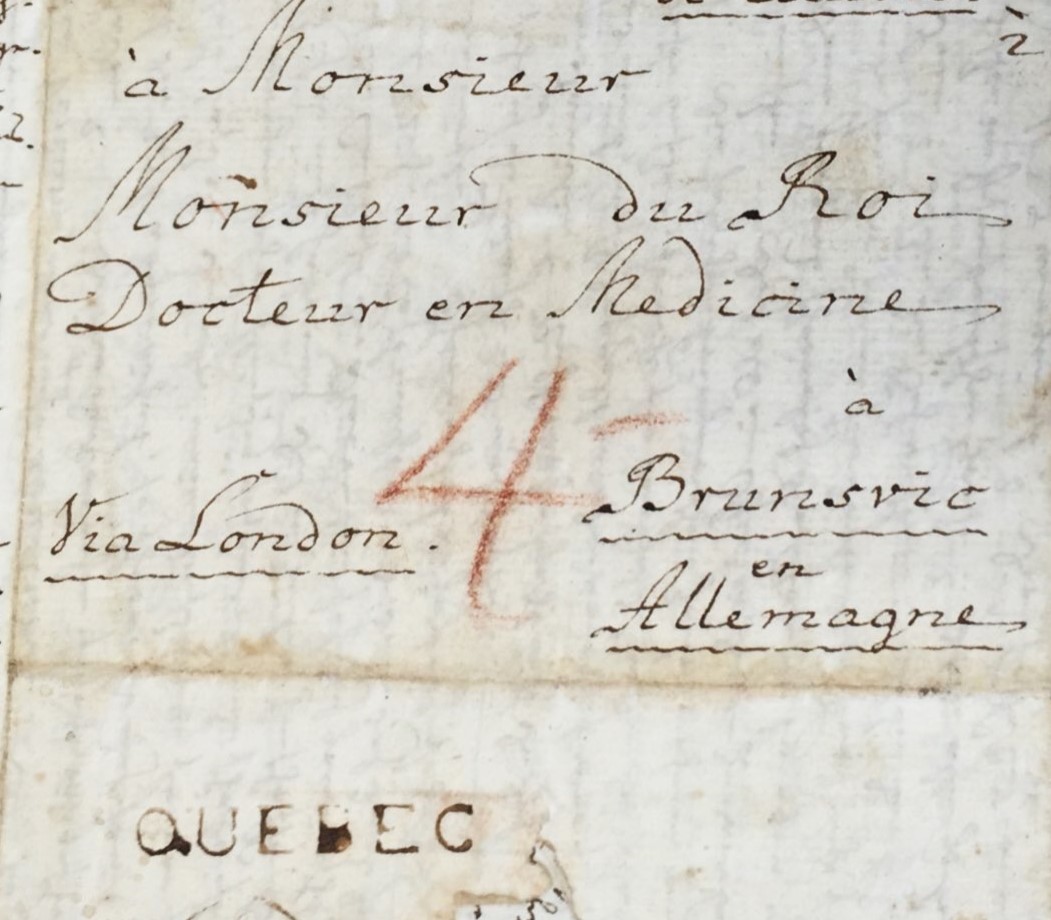
The recipient of this letter was his older brother Johann Philipp du Roi (1741-1785), a prominent botanist and doctor of medicine. Since 1777, he was serving as the physician for the court at Braunschweig, the city, and the garrison. Lieutenant Du Roi’s attribution of his excellent health at least in part to the lack of medicine and medical care is clearly meant to tease his physician brother.
In the letter, Du Roi mentions his younger brother, Lieutenant Anton Adolph Heinrich Du Roi (1746-1823), adjutant to Colonel Johann Friedrich Specht (1715-1787). Anton was one of around 2,400 Braunschweig and Hessen-Hanau soldiers that became American prisoners of war as a result of the British surrender at Saratoga in October 1777. When his brother was writing the letter from Quebec to his Family in Germany, Anton had been in American captivity for more than three years. Unbeknownst to his brother, he had probably recently been relocated from Virginia to Maryland. He returned to Canada some time later that year and was finally exchanged in October 1782.
Lieutenant Du Roi’s military career after his return to Germany in 1783 included service as a captain with his regiment in Maastricht. In 1807/8, he spent around one year as a French prisoner of war. In 1813, after serving as a lieutenant colonel in the army of the kingdom of Westphalia, he returned to Braunschweig. The following year, he killed himself by drowning.
Note on translation: Du Roi refers to Native Americans as “Wilde,” which translates as savages. In an effort to remain faithful to the original text, I am using this term in the translation.
ENGLISH TRANSLATION
In winter quarters in Lotbinière, February 22, 1781
My dear brother,
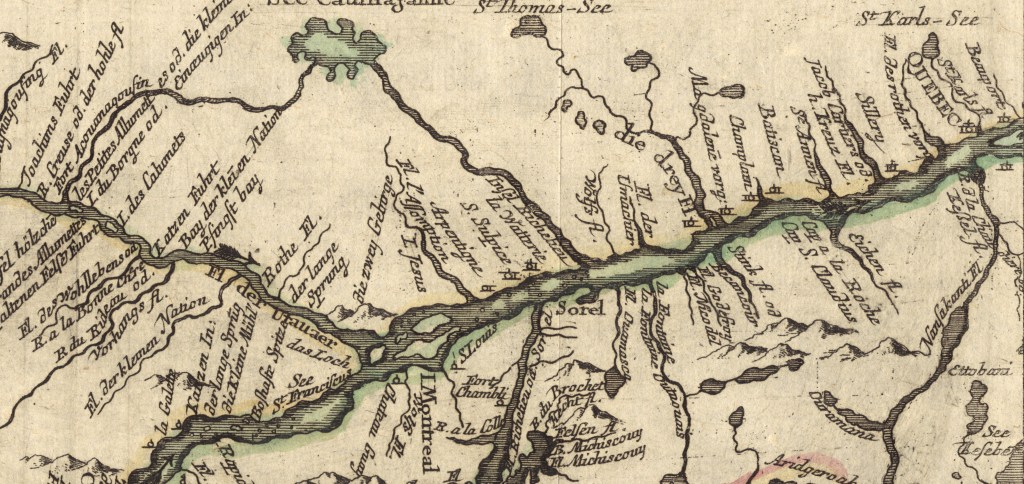
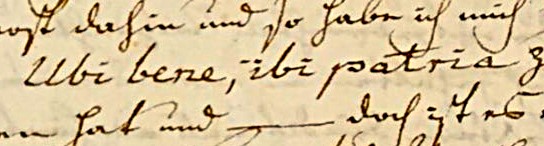
Five years ago today, I left you for my journey here, and how quickly the time has gone by, and it is not yet possible to determine with certainty when we will return. With much emotion I remember that day five years ago, and how moved I was when I passed by to the north of Braunschweig back then and I could not suppress the thought that I may never see it again. However, as a good citizen of the world, I went forth confidently and I have so far been able to remain calm about this. Ubi bene, ibi patria [home is where life is good], especially since one has nothing to lose in the fatherland. And yet, it is a special case with the love for the fatherland. Strange acquaintances do not have the trust and friendship of relatives and old friends, and this may be one of the main causes for this [special case]. Nevertheless, one has good reason to wish for the benefit of the fatherland that we will remain here very long and will not return any time soon. May it be as it cannot be otherwise, I am content regardless.
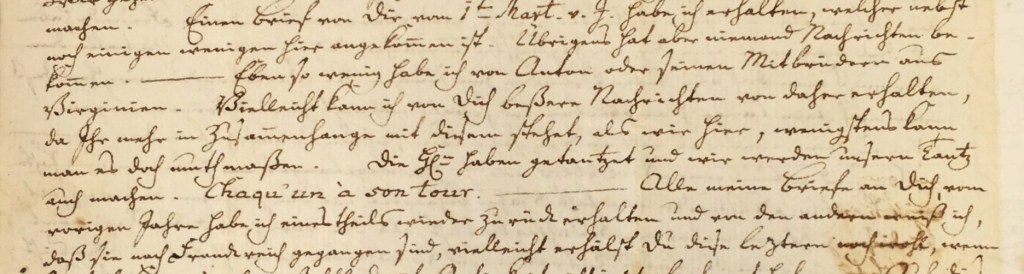
We arrived here in the end of November. We exchanged our post on the river Chambly that we maintained for almost three years with the post here, because it is considered more important than the previous one and the regiment has always been able to maintain a good reputation. However, the regiment is spread out over thirty-five leagues, which is about as far as from Braunschweig to Kassel. This is a significant distance for a battalion, which causes me not a little trouble and labor. The following parishes are occupied by us: Saint-Jean-Deschaillons, Lotbinière, Sainte-Croix, St. Antoine, St. Nicolas, St. Henri at the Chaudière River, and the Nouvelle Beauce, including Sainte-Marie, St. Joseph and St. Francois on the Sartigan River. The first, up to and including St. Nicolas, are on the southern shore of the St. Lawrence opposite from Quebec, and the latter are far into the country, and in St. Francois we have a fortified log cabin. The terrain here is mountainous and impassable. For the most part the snow is falling very high here, and if one wants to leave his quarter one needs to wear snowshoes on the feet. There is not a soldier in the regiment who cannot race on snowshoes with the best among the savages [“Wilden”], around fifty of whom are with us to support our patrols. I wish you could see us marching like this [with snowshoes], whereby it is essential to keep the steps as uniform as one would during a parade on the grey courtyard, and full of admiration you would rejoice about your countrymen. One can do anything with a soldier as long as one explains it to him as necessary, and this kind of persuasion does more wonders than the stick.
Because the region does not have much to offer, our quality of life is bad. Besides the cattle, which we eat so that the rebels and cousins cannot find anything, we live off the hunt, from the meat of the Elendtier [similar to reindeer] and bear which are very common here. In contrast, there aren’t any wolves for whom it is too cold and who move away to different regions. The worst that we have to endure here is the constant driving snow from which we have not yet been spared for a single day.
Our prospects and situation for what will follow are very critical and perhaps decisive. One has to wait. We are entirely ignorant about Europe and the course of the war in other regions, because nothing has come to us in the previous year and the news that was delivered by the few ships that reached us have been kept very secret and been suppressed. No recruits, no clothing. The latter bothers us the most and I cannot yet say what will be done about it. We are now entering the 5th year with it [clothing], and one can probably get an idea of it [imagine what it looks like]. I received a letter from you from March 1 of last year. It is one of a few that arrived here. However, nobody has received any news.
I also have nothing from Anton or his compatriots in Virginia. Perhaps I can get better news about them from you because you are in better communication with them than us, at least that is what one can assume. The gentlemen danced and we will do our dance as well. Chaqu’un à son tour [Everyone his turn].
Of all of my letters to you from last year, some have been returned to me and of the others I know that they were sent to France. Perhaps you will receive these at some point if the cousins have not entirely given up their world-renowned civility. Since this is doubtful, I will here recap and continue the events from last year and mention briefly that the regiment moved to a post at Fort Chambly and also occupied Fort St. John’s. In the meantime, Major Carleton undertook an expedition against the rebels across Lake Champlain. From there the regiment departed on November 17 and traveled here by bateaux, after we had already steadfastly endured cold weather and frost in camp and on the march, and we arrived just before the end of the year without an hour to spare. The regiment was equally fortunate in the year 1777 at the retreat across Lake Champlain.
I probably do not have to tell you that I am well, and you will not doubt that. I have never before in my life been as healthy as I am now. Entirely used to the different climate, I am withstanding all challenges and for a few years now, I have not had any medicine. This is probably the reason for my strong constitution because woe to the one who lets the physicians convince him to take preservatives and the like. However, quod medicorum est, Promittunt Medici [Physicians attend to the business of physicians]. Everyone is trying to earn his daily bread.
Domestica. I am now entirely satisfied with my Littmann. When you have a chance, you can let his wife know, to her great joy, that he is no longer drinking spirits and has not had any for three years now. She will hardly believe this, but you can assure her on my word. With patience and with force, one after the other, I have finally been able to get him that far; his deeply rooted habits at last very wisely followed my example. Of the India-travelers, one generally has the opinion that they are rougher and wilder in their habits and lifestyle than other people. However, I almost dare say the opposite, that rough people learn good habits in India. Examples of this are my above mentioned Hofmeister and also his current master. The latter occasionally used to drink a glass of schnapps in Europe but now he does not drink either that or coffee. Tea and cold water are now his beverages and occasionally a small glass of wine, but not adustum [burnt, as in Branntwein, or brandy]. This surely cannot hurt an old man? The smoking of tobacco is very limited and will perhaps cease entirely in due time, as challenging as this may be. In short, I firmly believe that you should be pleased with my improvement.
I have been collecting diligently for you this past year. However, it is a shame especially regarding the seeds that I was not able to get to you in time. This was one reason why I eagerly awaited the arrival of the recruits, since the training of these young gentlemen causes us much effort and burden. If we could only find time for it this year! However, it looks very doubtful as much as I wish and hope for it.
How are things with you and your family? Isn’t it true that you are already the 6th [father of six], because what death takes must be doubly replaced. Are they all boys? That would be better, for the father’s coffer, and also because they are loved more by the mother. The current time of war takes away many men that need to be replaced. But as an officer who is thinking of recruiting, I cannot count on them since your boys will hardly reach the [necessary] height. Let them learn something and send them here if they cannot earn their bread there. How is your dear wife? How are the sisters? How is Mister L. Medicus and his entire family? How is the Isenbarth household? How are all good friends and acquaintances? Is everyone still living healthy and happily? This I hope and wish for, and how pleasing to me would be good news about this. Give my regards to all, all and all, and do not forget anyone. Surely, they will forgive me that I cannot mention every name due to the limited room on the sheet of paper.
Is George still well? And what is the meaning of brother Lewis’ silence, whom you do not mention at all? Does it mean something good or bad? Kiss your dear wife often for me, and also do not forget the boys. They will probably have a special impression of their Avunculo [uncle]. Always live happily and healthy and well. Don’t let yourself get depressed and emaciated either by worries about food or about medical business but rather always keep your abdomen growing. Always remain my friend and love. Your devoted brother August.
[Written around the address after the leaves had been folded:]

Postscript: You once mentioned the wife of the soldier Broglis. I spoke with him about this, and he promised to send her something. He withholds everything out of frugality, never drinks spirits or smokes tobacco, but rather lives from provisions and water. He therefore has money, but he is fere consumatus [almost consumed] by hunger and old age, and it seems to me that he does not care much anymore for his wife. He is telling me that Elle est au Service du premier Medecin de S:A: Sme [She is at the service of the first physician of Serenissimus]. I would suggest sending her here, but your servants do not have much luck in the new world. A while back, a fat, handsome woman had to carry in her arms a block to which she was attached in front of the entire regiment. It was not because of her virtue and chastity, and she assured me afterwards that you would be very sad when you heard about this since she was in service for you as the wet nurse or lady-in-waiting for your first-born young master.
The young Praetorius, who arrived with the most recent transport of recruits, is conducting himself very well. He is learning languages and, as a result, promises to make a good useful man. Promotions here are bad and very hard to come by, but he is now appointed as a Free Corporal but with the wages of a musketeer. The old one [his uncle] apparently is doing more for him since he is conducting himself well; however, the old ones are hard and tough and the joy about the nephew’s arrival was not very great. But since I am a friend of all useful men, I will support the young ones when necessary.
We have received pretty good men with these recruits which is probably thanks to the German war. Captain Thomae will not praise them very much, because of the trouble they caused during the sea voyage; however, much of the blame also lies with the commanding officer in such incidents, especially when the soldier believes he surpasses his leader’s understanding. Moreover, the excessive parsimony of the officers during such journeys, which I understand is necessary, also contributes significantly to the contempt.
TRANSCRIPTION
Im Winter-Quartier zu Lotbinière, d. 22ten Febr. 1781
Mein lieber Bruder,
Heute vor 5 Jahren verliess ich Euch, um meine Wanderung hierher anzustellen, und wie geschwind ist doch diese Zeit dahin verpflogen, und noch jetzt kann man mit Gewissheit nicht absehen, wann wir mahl zurückkehren werde. Mit aller Lebhaftigkeit erinnere ich mich noch an diesen Tag vor 5 Jahren und wie gerührt ich bei Braunschweig nördlich, damals für über zog und den Gedancken nicht unterdrücken konnte, dass ich es schwerlich wiedersehen würde. Als ein gutter Weltbürger wandelte ich zwar getrost dahin und so habe ich mich bis jetzt auch noch stets darüber zu beruhigen gewusst. Ubi bene, ibi patria [wo es schön ist, ist meine Heimat] zudem wenn man in seinem Vaterlande nichts zu verlieren hat und doch ist es eine besondere Sache mit der Liebe zum Vaterlande. Fremde Bekanntschaften haben das Zutrauliche und freundschaftiche nicht, was Verwandte und alte Freunde haben und dies mag wohl eine der vorzüglichsten Ursachen dazu sein. Mit alle dem aber muss man doch aus guten Gründen zum Nutzen des Vaterlandes wünschen, dass wir noch fein lange hierbleiben und sobald noch nicht zurückkommen mögen. Mag es denn, wenn es nicht anders seyn kann, ich bin es auch zufrieden.
Wir sind im Ausgang November vor hier angelanget und haben unsern Posten am Chambly-Fluss, den wir fast 3 Jahre behauptet, mit den jetztigen verwechselt, da dieser jetzt von mehrerer Wichtigkeit ist, als der vorige und das Regiment noch stets ein gewisses, gutes Zutrauen sich zu erhalten gewusst hat. Dies ist der eigentliche Paß vom Kennebeck über den La Chaudière, wo man sich etwas vermuthen seyn muss. Das Regiment liegt aber zusammenhängend über 35 Lieues auseinander, ohngefehr so, als von Braunschweig bis Cassel, eine schöne Entfernung für ein Battaillon und welches mir vorzüglich, nicht wenige Mühe und Arbeit verursachet und folgende Paroissen sind von uns besetzt, als: St. Jean des chaillon, Lotbinière, Ste. Croix, St. Antoine, St. Nicolas, St. Henri am Chaudière, und die nouvelle Beauce, als Ste Marie, St. Joseph und St. Francois am Satigan-Fluss. Die ersteren bis incl. St. Nicolas liegen auf dem südlichen Ufer des Laurentz, gegen Quebec über, und die Letztern in der Tiefe des Landes, und zu St. Francois haben wir ein befestigtes Blockhaus. Es ist hier eine gebürgigte und unwegsame Gegend und der Schnee fällt hier, um ein grosses Theil, höher und wenn man nur aus seinem Quartier gehen will, muss man Schnee Schuhe (Raquets) unter den Füssen haben und ist nunmehr kein Soldat bey dem Regiment mehr, der nicht auf Raquets mit den besten Wilden, deren wir einige 50 zu Unterstüzung unserer Patrouillen, mit bey uns haben, in die Wette liefe. Ich wünschte es wohl, dass du einmahl uns so im Marsche sehen mögtest, wobey nothwendig eben so gut egaler Tritt gehalten werden muss, als bey der Parade auf dem grauen Hofe, und voll Bewunderung würdest du dich über deine Landesbrüder freuen. Man kann mit dem Soldaten alles anfangen, wenn man ihm es, als nothwendig, begreiflich macht und diese Überredung thut mehr Wunder als der Stock.
Da die Gegend hier nicht viel aufbringet, so ist unsere Lebensart schlecht und ausser den Ochsen des Landes, die wir aufzehren, damit die Rebellen und Cousin’s nichts finden sollen, leben wir von der Jagd, von Elend und Bären-Fleische, die es hier häufig giebt, dahingegen gar keine Wölfe, denen die Kälte zu strenge ist und nach anderen Gegenden hinziehen. Das Schlimmste, was wir in dieser Gegend ausstehen, sind die beständigen Pouderies [Schneetreiben] wovon wir noch fast keinen Tag gäntzlich befreyet gewesen sind.
Unsere Aussichten und Lage für die Folge ist jetzt sehr critisch und vielleicht entscheidend. Man muss es erwarten. Völlig in Unwissenheit sind wir von Europa und dem Laufe des Krieges an den anderen Gegenden, da voriges Jahr nichts zu uns gekommen ist und die mitgebrachten Nachrichten von den wenigen Schiffen, die noch angelanget sind, sehr Heimlich gehalten und unterdrückt werden. Keine Recruten, keine Mondierung. Dies letztern drückt uns am härtesten und ich sehe es noch nicht ab, wie es zu Machen steht. Wir gehen damit nun ins 5te Jahr und dann kann man sich wohl einen Begriff davon Machen. Einen Brief von Dir vom 1ten Mart. v. J. habe ich erhalten, welcher nebst einigen wenigen hier angelangt ist. Übrigens hat aber niemand Nachrichten bekommen.
Eben so wenig habe ich von Anton oder seinem Mitbrüdern aus Virginien. Vielleicht kann ich von Dich bessere Nachrichten von daher erhalten, da Ihr mehr im Zusammenhange mit diesem stehet, als wir hier, wenigstens kann man es doch muthmassen. Die H[erren] haben getanzet und wir warden unsern Tantz auch Machen. Chaqu’un à son tour [Jeder der Reihe nach].
Alle meine Briefe an Dich, von vorigen Jahre habe ich eines theils wieder zurückerhalten, und von den anderen Weiss ich, dass sie nach Franckreich gegangen sind, vielleicht erhältst Du diese letztern noch wohl, wenn sonst H[erren] Cousin’s, ihre weltbekannte Artigkeit nicht jezt abgeleget haben. Auf diesen noch zweifelhaften Fall, will ich noch hier unsere Vorfälle des vorigen Jahres nachholen und fortsetzten und kurtz sagen, dass wir ein Lager bis zum Fort Chambly mit dem Regiment bezogen gehabt, auch zugleich Fort St. John’s besetzt haben, indessen der Major Carleton eine Expedition über den Lac Champlain gegen die Rebellen machte und von da ist das Regiment erst d. 17. Nov. aufgebrochen und mit Bateaux hierher gefahren, nachdem wir Kälte und Frost sowohl im Lager schon als auf dem Marsche hertzhaft ausgehalten haben und eben mit dem Schlusse des Jahres hier ankommen, so dass fast keine Stunde übrig mehr war. Eben so glücklich war das Regiment auch im Jahr 77. bey dem Zurückzug über den Lac Champlain.
Ob ich noch wohl sey, dies gebrauche ich wohl eben nicht hier zu sagen und wirst du nicht daran zweifeln. Noch niemals bin ich in meinem Leben, so gesund als jezt gewesen, völlig nunmehr an die Veränderung des hiesigen Clima gewöhnt, trotze ich allen Beschwerlichkeiten und seit einigen Jahren weiss ich nichts von medicinieren. Dieses ist aber wohl der Grund meiner jetzigen starcken Constitution, den wehe dem, der sich erst Praeservative oder sonst dergl. von den Aerzten ins Leib reden lässet. Doch, quod medicorum est, Promittunt Medici [Ärztliche Leistung ist der Ärtze Beruf]. Ein jeder suchet sein tägl. Brod zu gewinnen.
Domestica. Mit meinen Littmann bin ich jetzt nunmehr gantz gut zufrieden und seine Frau kannst du gelegentlich, zu ihrer grossen Freude, wissen lassen, dass der selbe gantz und gar keinen Branntwein mehr trincke und auch schon keinen seit 3 Jahren keinen mehr getruncken habe. Sie wird dieses kaum von ihm glauben, du kannst es ihr aber, auf mein Wort, versichern lassen. Mit Guten und mit Gewalt, ein ums andere, habe ich es endlich so weit mit ihm zu Stande gebracht, Sehr weislich hat er zuletzt seine tief gewurtzelte Gewonhheit, meinem Eigensinn nachgesetzt. Man hat von den Indien-Fahrern gewöhnlicher Weise, die Meinung, als ob selbige rauher und wilder wie andere Menschen, in Lebensart und Sitten wären. Bald getraute ich mich aber völlig das Gegentheil zu behaupten und dass rauhe Leute in Indien erst die guten Sitten lernen. Exempel davon, sind gleich, mein obgedachter Hofmeister und auch dessen jetziger Herr, letzterer trank auch wohl zuweilen in Europa einen Schnaps, jezt aber weder diesen, noch auch Caffee mehr. Thee und kaltes Wasser ist jetzt sein Getränk und zuweilen wohl ein Gläsgen Vinum, aber nicht adustum. Dies kann doch wohl einem alten Mann nicht schaden? Das Tabakrauchen ist sehr eingeschränket und wird, vielleicht, noch gantz mit der Zeit abgewöhnt, so schwer es auch damit gehen mogte. Kurtz, ich glaube fest, dass du dich über meine Besserung freuen soltest.
Ich habe für dich auch im vorigen Jahre fleissig gesammelt, nur schade ist es, besonders für die Sämeringen, dass ich es nicht habe nach dich in Zeiten hinschaffen können, und aus diesem Grunde mit, habe ich die Ankunft der Recruten sehnlich gewünschet, da uns sonst die Zucht dieser jungen H[erren] viel Mühe und Last macht. Wenn doch dieses Jahr sich nur gute Gelegenheit dazu finden mögte! Ohnerachtet es jezt noch sehr zweifelhaft dazu aussieht, so sehr ich es auch wünsche und noch hoffe.
Wie steht es mit Dir und Deiner Familie? Nicht wahr, jetzt bist du doch schon selbst 6te, den was der Tod nimmt, muss doppelt wieder ersetzt warden. Sind es lauter Jungens? desto besser, sowohl für den Geld-Kasten des Vaters , auch mehr von der Mutter geliebt. Die jetztigen kriegerischen Zeiten nehmen viel Menschen weg, die wieder ersetzet warden müssen. Doch als ein Officier, der anzuwerben denckt, kann ich nicht hierbey rechnen, da deine Jungens schwerlich die Maasse kriegen werden. Lasse sie also was lernen und sende sie hier, wenn sie dorten ihr Brod nicht finden könnten. Wie befindet sich deine liebe Frau? Wie die Schwestern? Wie der H[err] L. Medicus und dessen gantze Familie? Wie im Isenbarthschen Hause? Wie alle gute Freunde und Bekannte? Lebt noch alles wohl und vergnügt? Dies hoffe und wünsche ich und wie angenehm sollen mir gute Nachrichten davon seyn. Empfiehl mich bestens allen, allen und allen zum Geneigten Angedecken und in Ihre Gewogenheit und vergiss dabei niemanden und jedem ins besondern. Gewiss werden mich Selbige, des wenigen Platzes auf einem Briefbogen wegen, entschuldigen, dass ich nicht jeden Nahmen besonders hier hersetze .
George ist doch noch wohl? und was bedeutet das Stillschweigen von Bruder Lewis, welchen Du gar nicht mehr erwähnst? bedeutet es was Gutes oder Böses?
Küsse deine liebe Frau meinetwegen oft, auch vergiss hierbey die Jungens nicht. Die sich wohl eine besondere Vorstellung von ihrem Avunculo [Onkel] machen werden. Lebe vergnügt und stets gesund und wohl dahin. Lasse dich weder durch Nahrungs, noch medicinischer Geschäfts-Sorgen unterdrücken und abzehren, sondern erhalte stets deinen Abdomen in Zuwachs. Bleibe stets mein Freund und Hold. Deinem aufrichtig ergebensten Bruder August.
[Neben der Addresse:]
N.S. Du hast gegen mich einmahl des Soldat Broglis Frau erwähnt, ich habe mit demselben da rüber geredet und er verspricht auch etwas ihr zu senden. Er entzieht sich, aus Geitz selbsten alles, trinckt niemals Branntwein oder raucht Taback, sondern lebt von provision und Wasser, hat also folgl. Geld, allein er ist fere consumatus für Hunger und Alter und mir scheint es, als wenn er aus seiner Frau nicht viel mehr macht. Elle est au Service du premier Medecin de S: A: Sme wie er mir sagt. Ich wolte wohl rathen, sie her zusenden, aber deine Dienstbothen haben nicht viel Glück in der neuen Welt. Eine fette, ahnsehnliche Dame muste hier vor einiger Zeit vor versammelten Regiment einen Block woran sie geschlossen wurde, im Armen tragen. Nicht ihrer Tugend und Keuschheit wegen, und diese versicherte mir nach her, dass Du Dich sehr betrüben würdest, soltest Du es erfahren, da sie als Amme oder Warte Frau bey Deinen erstgebornen jungen Herrn, Dir gedient hätte.
Der junge Praetorius, welcher mit dem letzten Recruten Transport angekommen ist, führet sich sehr gut auf, lernt Sprachen und verspricht für die Folge einen guten brauchbaren Mann abzugeben. Die Beförderungen sind hier schlecht und sehr rar zu suchen, doch ist er jetzt zum P[?]it[?]: Gefr: Corporal, doch mit Mousq. Gehalt angestellt. Der Alte thut wohl etwas mehreres an ihm, da er sich gut aufführt: allein die Alten sind hart und zähe und die Freude über die Ankunft des Neffen war eben nicht sehr gross. So wie ich aber ein Freund aller brauchbaren Leute bin, so halte ich den jungen H[erren] die Stange, wenn es nöthig ist.
Wir haben überhaupt mit diesen Recruten ziemlich gute Leute erhalten, welches aber wohl dem teutschen Kriege zu verdancken war. Hauptm. Thomae wird sie zwar nicht sehr loben, den sie viele drangseln auf dem Seetransport angethan haben; allein viele Schuld liegt auch mit an dem Befehlshaber bey solchen Vorfällen und wehe als dann, wenn der Soldat seinem Führer an Verstande zu übersehen glaubt. Auch die übertriebene. Parsimonia [Sparsamkeit]des H[erren] auf solchen Touren die sie sehr nötig haben, wie ich wohl einsehe, trägt zur Verachtung auch vieles mit bey.
Citation and Featured Image: The letter is included in the file labeled “Amerika,” HV: 9, City Archives Braunschweig, Germany.
 Hessians - German Soldiers in the American Revolutionary War
One thought on “Ubi Bene, Ibi Patria. Quebec, 1781”
Comments are closed.