In the fall of 1779, the Hessian Captain August Eberhard von Dincklage of the Prince’s Own Infantry Regiment (Leib-Infanterie-Regiment) was one of several thousand Hessian troops stationed in New York. At the time, Britain’s prospects in the war looked bleak. France had entered the conflict as an American ally in the spring of 1778, and Spain had declared war on Britain in the summer of 1779. The American rebellion had become a global war.
On October 17, 1779, when Dincklage made the diary entry featured in this post, British military control within the rebellious colonies was limited to New York City, Newport, Rhode Island, and Savannah, Georgia. Savannah was at that very moment successfully repelling a Franco-American attempt to retake it. However, Newport, which had successfully withstood an earlier joint Franco-American assault, would be evacuated by the British just one week later, on October 25, 1779. After four and a half years of war with little to show for it, the British were preparing to stake their hopes on a major campaign in the southern colonies.
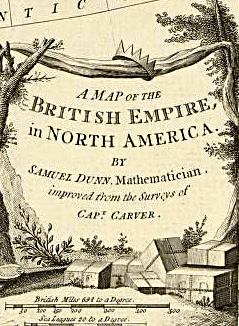
Captain Dincklage blamed Britain’s struggles on the nation’s “negligence, pride, and poor political judgment.” Above all, he saw the Seven Years War (in North America known as the French and Indian War) as a foolish mistake that had contributed to the significant problems that Britain was now facing in North America. This expensive war, which ended in 1763, had yielded nothing more than “a few wild and useless provinces.” By this, Dincklage meant Canada, West Florida, which stretched along the Gulf Coast from the Mississippi River to the Apalachicola River, and East Florida, which covered the region east of the Apalachicola River and most of modern-day Florida. He believed that William Pitt, 1st Earl of Chatham (also known as Pitt the Elder), “the great and in England so highly renowned statesman,” had dragged Britain into this war out of juvenile ambition: the desire to see “The British Empire” emblazoned across a map stretching “from the Gulf of Mexico all the way to the North Pole.”

Captain Dincklage was fairly confident that the Americans would achieve independence, though he doubted they would be better off than under the king’s rule. In this, he shared the skepticism about the future of an independent United States that was common among German officers. His characterization of the British as proud and negligent likewise echoed a recurring theme in German-authored records of the period.
ENGLISH TRANSLATION
On the 17th [of October 1779], several ships with troops set sail for Sandy Hook, and it was said that they were bound for Halifax. The news now coming in is very bad, and it is believed that Georgia and St. Augustine are already in the hands of the rebels and the French. Where the English fleet from the West Indies is located is a mystery; should the French gain the upper hand on these seas, then everything will soon be lost, and I do not see how the English will be able to remain in America. In short, their situation is now worse than it has ever been before, and all of this through their negligence, pride, and poor political judgment. Otherwise, they could easily have foreseen all this. Nevertheless, I still believe that the Americans will in the end gain the least advantage from it. Even if they force their independence from the English, they will hardly remain without a yoke and will surely double their burden. But that is how it goes, and how it has gone from the beginning of time, that the schemes of men, even when conceived by the greatest statesmen, very often produce the opposite effect. He in Heaven laughs at the schemes of short-sighted mortals. I look with pity upon the great and in England so highly renowned statesman, Lord But Pitt. He squandered the fortunes of Great Britain and, after France would have had to endure anything, made a peace by which England gained nothing but a few wild and useless provinces, which cost far more to preserve than they bring in (namely Canada and the two Floridas) and because of which they are now losing all their colonies. But it went with this statesman as it does with children; it sounds so nice and looks good when on the map, from the Gulf of Mexico all the way to the North Pole, it is written: The British Empire. So it was with the first Spanish colonizers of Peru who built great stone houses, despite the warnings of the native inhabitants, and found in them their inevitable destruction.
TRANSCRIPTION
Den 17ten [Oktober 1779] gingen verschiedene Schiffe mit Truppen unter Segel nach Sandyhuoock, und wie es hieß bestimmt nach Halifax. Die Nachrichten welche jetzt einlaufen sind sehr böse, und glaubt man daß Georgien und St. Augustina schon in den Händen der Rebellen und Franzosen. Wo die englische Flotte von den Westindier sich aufhält ist ein Rätsel, sollten die Franzosen in hiesigen Seen die Oberhand behalten, so wird bald Alles verloren sein, und sehe ich nicht ein, wie die Engländer sich in Amerika erhalten wollen. Mit einem Wort, die Lage derselben ist jetzt so schlimm, wie wohl noch nie gewesen, und dieses Alles durch ihre Nachlässigkeit, Stolz und schlechte politische Einsichten, leicht hätten sie sonst alles dieses vorhersehen müssen; inszwischen so glaube ich doch daß die Amerikaner zuletzt den wenigsten Vortheil davon haben werden, wenn sie auch die Independens von den Engländern erzwingen, so werden sie doch schwerlich ohne Joch bleiben, und gewiß ihre Last verdoppeln. Aber so geh[t] es, und hat von allen Zeiten her so gegangen, da[ß] die Anschläge der Menschen, wenn sie auch von den größten Politker erdacht, sehr oft, die entgegengesetzte Wirkung hervorbringen. Der im Himmel, lacht über die Anschläge der kurzsichtigen Sterblichen. Mit Mitleid sehe ich auf den großen, und in England so sehr berühmten Staatsmann, den Lord But Pitt, derselbe verschwendete die Schätze Großbrittaniens, und machte nachdem Frankreich sich Alles hätte müssen gefallen lassen, einen Frieden, wodurch England nichts gewann, als ein paar wilde und ununnütze Provinzen, welche viel mehr zu bewahren kosten als sie einbringen / : nämlich Canada und die beiden Florida : / und wodurch sie jetzt ihre ganze Colonien verlieren. Aber es ging diesem Staatsman, wie den Kindern, es lautet doch schön, und sieht gut aus, wenn auf der Landcharte von dem Mexicanischen Meerbusen an bis zum Nordpol geschrieben stehet: The Britisch Empoire. So baueten sich die ersten spanischen Besitznehmer von Peru, ohngeachtet der Warnung von den alten Einwohnern, große steinerne Häuser, und fanden darin ihren unvermeidlichen Untergang.
Citation: August Eberhard von Dincklage, Tagebuch 1776 – 1784 (Abschrift), 4° Ms. Hass. 186, ff. 231-233, Universitätsbibliothek Kassel, Landesbibliothek und Murhardsche Bibliothek der Stadt Kassel.
Featured Image: Samuel Dunn and Jonathan Carver, A map of the British Empire, in North America. London, 1776 (detail), Library of Congress. Accessed at https://www.loc.gov/item/74693100/.
 Hessians - German Soldiers in the American Revolutionary War
One thought on “It Looks so Good when on a Map it is Written: The British Empire. 1779.”