Different personal and official accounts of the same military encounter do not necessarily tell the same story. It is not uncommon to discover inconsistencies such as varying numbers of participants (and casualties) or conflicting descriptions of the details of battle. There are many possible reasons for these differences. They could stem from faulty or selective memory or the author’s desire to distort the record. The intended audience also plays a major role in the way in which the author may describe an occurrence or experience. The diaries of members of the German corps also occasionally include descriptions of events at which the author was not present. Instead of sharing his own experiences, the scribe may have copied information from another record, or he based his description on stories that were shared by men who were there. And in some cases, these accounts, based on others’ recollections, differ significantly from what historians believe actually happened, based on other, more reliable, evidence.
The record included with this post is an example of an unreliable account. It comes from the diary of the Hessian Grenadier Johannes Reuber. He was seventeen years old when he went to North America as a member of the second division of Hessians in the spring of 1776. He belonged to the grenadier regiment that was commanded by Colonel Johann Gottlieb Rall. In the fall of 1776, this unit participated in the successful New York campaign before moving into winter quarters in Trenton, New Jersey. Reuber was one of an estimated 1,000 Hessians who was captured at the Battle of Trenton in late December. He was an American prisoner of war until his exchange in September 1778. Shortly thereafter, he was one of several thousand Hessians who participated in the Southern campaign. By the spring of 1780, he belonged to a large British-German force that put Charleston, South Carolina, under siege.
In April 1780, General Henry Clinton dispatched a British force from Charleston to cut off communication and supply lines between the city and rebel forces outside of the city. The force of around 1,400 men was led by Lieutenant Colonel James Webster, Major Patrick Ferguson, and Lieutenant Colonel Banastre Tarleton. Their destination was Monck’s Corner, roughly thirty miles north of the city. An estimated 500 Americans under Lieutenant Colonel William Washington and Brigadier General Isaac Huger were encamped at that place.
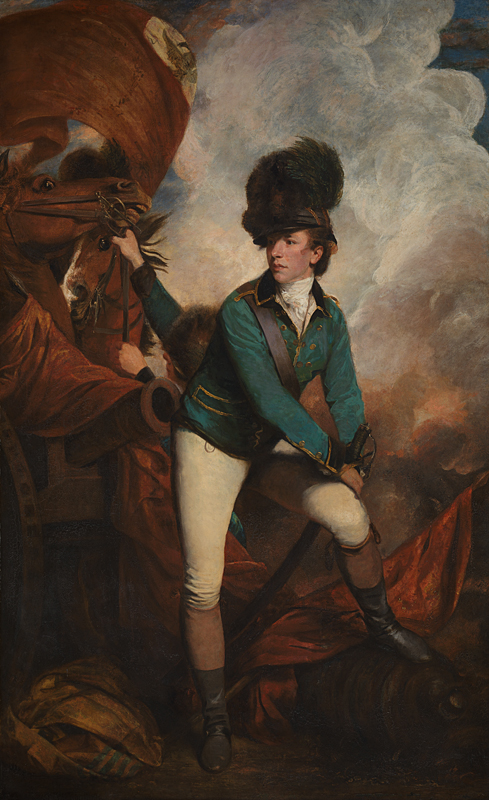
According to Tarleton’s published account (History of the Campaigns of 1780 and 1781 in the Southern Provinces), during their approach, the British intercepted a letter from Huger addressed to General Benjamin Lincoln in Charleston. Thanks to intelligence obtained from this letter and from the courier, “Lieutenant-Colonel Tarleton’s information relative to the situation was now complete.”
(Image: Sir Joshua Reynolds, “Colonel Tarleton” (1782), The National Gallery London.)
In the darkness of night, Tarleton then launched a surprise attack that resulted in a humiliating defeat for the Americans. Their losses included around one hundred killed, wounded, missing or captured. Many men fled into the swamps. In addition, the British took large quantities of supplies and hundreds of horses. It was an important victory that cut off Charleston from inland South Carolina. It also established Tarleton’s reputation as a fearless commander.
Johannes Reuber did not participate in this battle. In fact, no German troops took part in it. Nevertheless, Reuber included a description of what became known as the Battle of Monck’s Corner in his diary. Although the outcome of the battle (a British victory) in Reuber’s account is consistent with other records, his story differs dramatically from what we know about this event from other sources, including Tarleton’s published recollections. Most significantly, Reuber believed that it was the Americans who attacked the British, rather than the other way around. He also thought that the Americans had captured a British spy instead of the British intercepting an American carrying a letter addressed to Lincoln. Reuber claims that this man led the Americans through the swamps to the British encampment where they launched a surprise attack. The British, he writes, defended themselves successfully, causing confusion among the rebels and driving them into the swamps. Reuber also claimed that the Americans numbered 6000 men, when their actual strength was around 500.

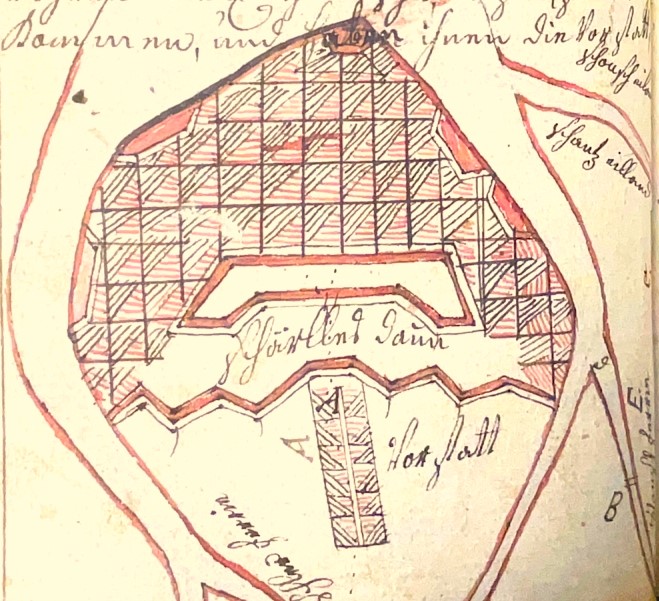
Johannes Reuber’s diary is a remarkable record. For one, it is one of very few surviving diaries penned by a common soldier belonging to the German corps. Moreover, it covers his service in North America from 1776 to 1783 (in addition to his subsequent military career in Europe, including the Netherlands). Sprinkled throughout the pages are drawings of various locations, individual vessels, and fleets. Also, Reuber’s orthography is interesting, to say the least.
Johannes Reuber’s diary is a unique and valuable record of the American Revolutionary War. However, as this post illustrates, he is not always a reliable witness. We do not know the exact reasons for the discrepancies between other records and the Hessian grenadier’s description of the Battle of Monck’s Corner. But we can speculate why he may have gotten a number of things wrong. As mentioned earlier, he himself was not at the battle; his account was based on information he must have gotten from someone else. It is reasonable to assume that the German troops in South Carolina, including Reuber, learned about it from British troops who had been there or who had learned about it from fellow soldiers who had participated. It is quite possible that the Germans misunderstood information due to the language barrier. In addition, internal evidence from the diary suggests that Reuber recorded at least some entries some time after the date, possibly months or even years later. He may have simply misremembered or confused some of the details.
To date, I have identified three copies of Reuber’s diary, written in the same hand but with minor variations in content, orthography, and illustrations. The transcription and images included here come from the copy in the Rutgers University library, New Brunswick, New Jersey. The pages in this diary are not numbered.
ENGLISH TRANSLATION
When it was nearing fall in 1779, the former Grenadier Regiment von Rall in Savannah received orders to go to Charleston by water. The Hessian Regiment von Wissenbach, now known as Knoblauch, had to remain in Savannah, and the Grenadier Regiment von Rall was embarked and traveled for two days and two nights from Savannah to Charleston. On the third day, we arrived in the harbor at Charleston and disembarked there. We joined the occupation of the city of Charleston with the Regiment von Ditfurth and the Regiment von Benning and the former Grenadier Regiment von Rall, and we remained there quietly until 1780. In spring, we were exercised as though we were in Hessen, and when the exercising was over in the summer, the English troops marched into the interior, approximately 30 or 40 miles to a pass that was called Monck’s Corner. At this location, the Americans were supposedly assembling and had been observed. After they had been standing there for some time, the Americans captured a spy from the English side. Instead of hanging him immediately, they spared his life with the condition that he tell them how they would be able to attack the English army. Behind the English army, there was a large swampy area where the army stood very securely, and which was not strongly occupied by the English. This English spy advised them to go through the swampy marsh along a concealed path which they had improved with fascines at night and during the march, and he did indeed bring the Americans to the English army. When it [the fighting] started, they let the spy go, and he ran straight into the English camp and gave alarm over alarm. The English troops, not slowly and just as they were, immediately attacked. At that time, the Americans had not yet been able to bring their 12 cannon through the swampy path. Now the rebels fell into confusion, and the English troops attacked from all corners. The Americans wanted to retreat, and they all ended up in the swamp due to the darkness and confusion. Now the rebels were defeated. Whoever did not drown was captured in the swamp, totaling about 6,000 men and 12 cannon and 12 flags, with one American flag on each cannon. An English detachment brought the cannon and flags to Charleston to the parade ground, where they were taken to the English artillery park for safety. A feu de joie was made around the city.

TRANSCRIPTION
Weil es nun auf den Herbst ging in 1779 so erhilt, Das geweßene R[allsche] Grenatir Regimend, order in Savanna, Das wir es, Solten, zu Was[er] gehen, nach Schärlles Don [Charleston], und D[as] Regimend Wißenbach, von den he[ssen] nun Mehro aber Das Regimend Kno Belauch heist, muste in Savanna stehen pleiben, jetzt kahm, Das Ralsche Grenatir, Regimend, aufs Waßer, und fuhren 2 Dage, und zwey nachte Von Savana Bis Schärlles Don, und den driten Dag, fuhren wirs in den Haffen Vor Schärlles Don, und stiegen Bey der Statt, auß, aus, und kahmen zur Besatzung in Schärlles Doun, Bey Das Dittfortiesche Regimend, und Benningsche Regimend und Lagen Da nun Stille, bis auf 1780 Des fühjahr, thätten wir Exser Cierren, als währen wir es, in Heßen Weill das Excer cieren Vorbey wahr, so wars im, nach Sommer, Das Engelieschen Drupen ins Land Marschirten, Wohl un gefähr, 30 oder 40 Engelische Meillen, alwo ein baß [Pass] war, Welcher sich, Mungs, Korner [Monck’s Corner] schrieb, an Dießem platze, solten sich die americahner, Versamllen, und sehnen laßen, Weill sie nun, einen Zeitlang, Da gestandten hatten, so hatten die Americaner, ein Spiegon [Spion] von der Engelischen Seide auf gefangen, an stat, Daß sie ihn Wohl hätten, Gleich auf gehangen, so hatten sie ihm, das Leben geschenckt, aber mit dem Beding[ung], er solte, ihnen sagen, wie sie die Engelische Armee konden überfallen, So War also hinder, der Engelischen Arme, ein Großer Sumpiescher [sumpfiger] platz, alwo die Armee Gantz sicher Stund, und nicht Starck, besetzt War, von den Enge ländern, und dießer Engelische Spiegon, hatte sie gerathe, durch den Schumpieschen Maras [sumpfigen Morast], einen plinden Weg, Welchen sie mit faßchienen [Faschinen], hatten in der nacht, und währenden Marsch, aus gebeßert, und erbrachte, Die Americaner auch richtig, under die Enge liesche Armee, und weill es nun Loß ging, so hatten sie Spiegon Laufen Laßen, und der Spiegon, war gleich zum Engelieschen Lager, Neun [hinein] gelauffen, und Lerm, über Lerm, Gemacht, die Engelieschen, nicht Lang sam, und wie sie wahren, Gleich Sturm auf Sturm, gegangen, nun wahren, den Americaner, ihre 12 Canonen, noch nicht alle durch, den Schumpfiegden Weg, jetzt Wahren, Die Rehbellen, in Ver wirrung, Gerathen, und die Engeländer, setzten Sturm, Von allen ecken an, und Die Americaner, Wolten Retterieren, und gerieden, alle in den Schumpf [Sumpf], Wegen finsterich keit [Finsternis]und Ver wirrung, jetzt waren die Rebellen Geschlagen, Waß nun nicht Verschof [ersoff], wurde alles gefangen, im schumpfe, allso währen 6000 Man, und 12 Canonnen und 12 fahnen, auf jeder Canone eine Americaniesche fahne, jetzt brachte ein Engeliesches, Commando, Die Canonen, und fahnen, nach Schärless Doun, auf den Berathe [Parade] platz, Da kahmen sie, in Die Engelische Barg, zur Versicherunge Da wart ein freuden feuer gemacht um die Statt rum.
Citation and Featured Image: Johannes Reuber, Military Journal, 1776-1806 (inclusive), MC 589, n.p., Rutgers University Library, New Brunswick, New Jersey.
 Hessians - German Soldiers in the American Revolutionary War
One thought on “Now The Rebels Were Defeated. Monck’s Corner, 1780.”